By Brindhavvan Areion Hospital, Chamrajpet, Bengaluru
Climbing the stairs feels like a mountain trek. Putting on your socks has become a daily struggle. A short walk to the market ends with a deep ache in the groin that follows you home. When hip pain starts to decide how you live, it is natural to search for hip replacement surgery near me in Chamrajpet and wonder whether the operation is right for you, how safe it is and how long recovery really takes.
Hip replacement is one of the most successful operations in modern orthopaedics. For people whose hip joint is badly damaged, it can take away pain, restore movement and give back the freedom to walk, climb and enjoy family life. This guide explains who needs a hip replacement, what the surgery involves, what recovery looks like and how to choose the right hospital in Bangalore. It also shows how the orthopaedic and surgical teams at Brindhavvan Areion Hospital, a 24/7 multispecialty hospital in Chamrajpet, support patients through every step.
Understanding the Hip Joint
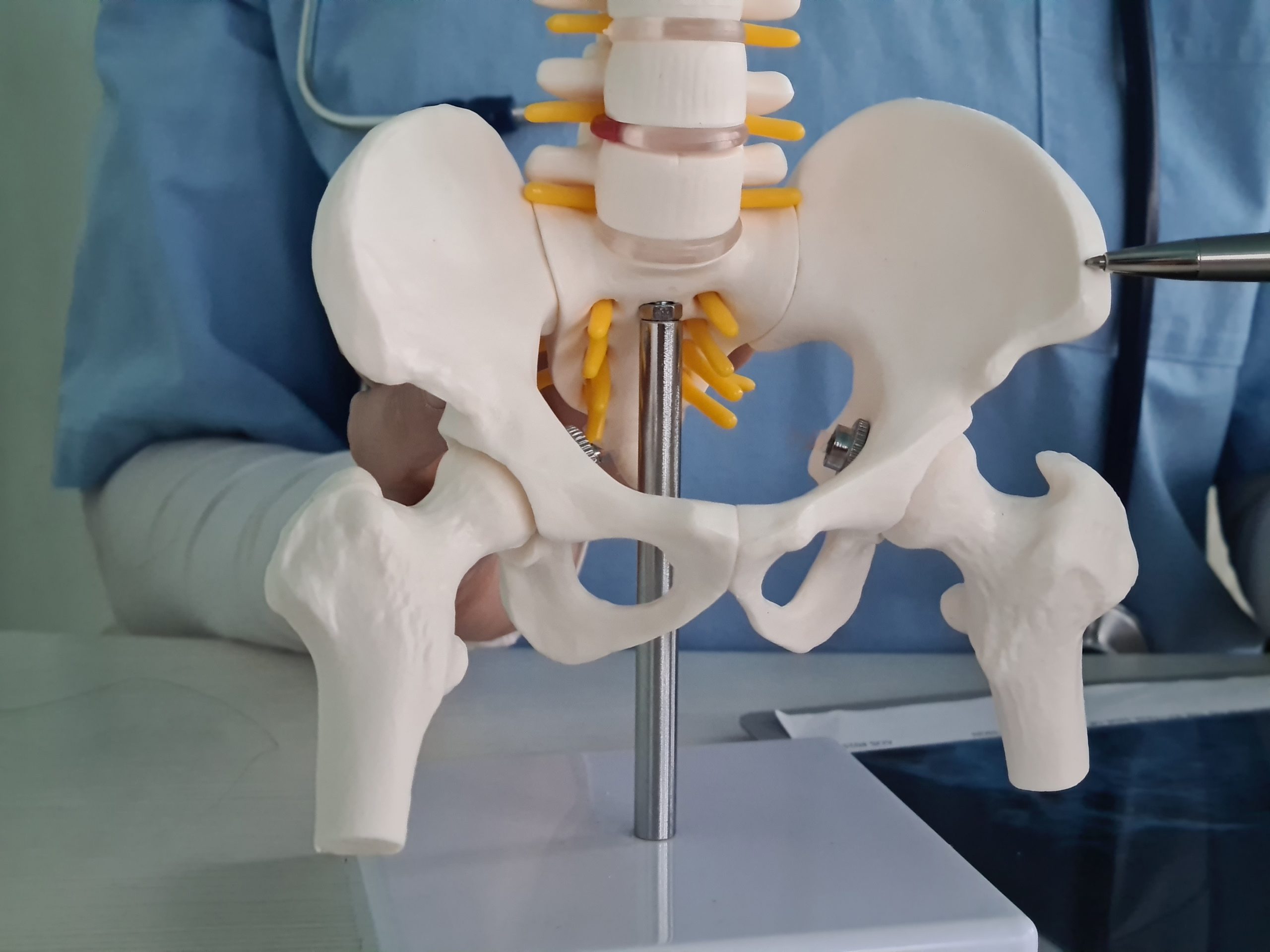
The hip is a ball-and-socket joint. The ball is the rounded top of your thigh bone (femur), and the socket is a cup-shaped part of the pelvis (acetabulum). A smooth layer of cartilage covers both surfaces so that they glide against each other without friction, and a lubricating fluid keeps the movement easy. The hip carries the weight of your upper body and absorbs the force of every step you take, which is why it is so important for walking, sitting, climbing and bending.
When the cartilage wears away, or the bone itself is damaged, the joint surfaces rub against each other. The result is pain, stiffness and a gradual loss of movement.
Common Causes of Hip Damage
Several conditions can damage the hip joint badly enough to need replacement:
- Osteoarthritis: the most common cause. The cartilage wears down with age, previous injury or long years of heavy load on the joint.
- Avascular necrosis (AVN): the blood supply to the head of the thigh bone is reduced, so the bone weakens and collapses. It can be linked to injury, steroid use, heavy alcohol intake and some other conditions.
- Rheumatoid arthritis and other inflammatory arthritis: the immune system attacks the joint lining and damages the cartilage.
- Hip fracture: a broken neck of the femur, common in older adults after a fall, often needs replacement of part or all of the joint.
- Developmental problems: such as hip dysplasia or childhood hip disease, which cause early wear of the joint.
- Old injuries and infections that have left the joint damaged.
A proper examination and X-ray are needed to find out which of these is affecting you, because the cause influences the treatment plan.
Symptoms: How Do You Know Your Hip Is Failing?
Hip problems rarely begin suddenly. Most people notice the following over months or years:
- Pain in the groin, outer hip, buttock or thigh, sometimes spreading to the knee
- Pain that worsens with walking, standing up from a chair or climbing stairs
- Stiffness, especially in the morning or after sitting for a while
- Difficulty putting on shoes and socks, or sitting cross-legged
- A limp, or the need for a stick to walk
- Pain at night that disturbs your sleep
- A grinding or catching feeling in the joint
- Reduced range of movement
Pain that travels from the hip to the knee is easy to mistake for a knee problem, so many patients are first treated for the wrong joint. If your pain is in the groin or you struggle to move the hip, ask for a hip examination.
When Do Doctors Recommend Hip Replacement Surgery?
Surgery is not the first step. Doctors usually try other treatments first, and recommend a hip replacement when:
- Pain remains severe despite medicines, physiotherapy, weight management and walking aids
- Daily activities such as walking, dressing, sleeping or using the toilet have become difficult
- X-rays or scans show clear damage to the joint
- The hip is broken, or the head of the thigh bone has collapsed
- Quality of life has dropped and the person is otherwise fit enough for surgery
There is no fixed age for hip replacement. The decision depends on the damage, the pain, your general health and your goals, not on the number of years you have lived. Younger patients with severe damage and older patients with fractures both benefit.
Treatments to Try Before Surgery
In the early stages, many people manage well without an operation. Your orthopaedic doctor may suggest:
- Physiotherapy and exercises to strengthen the muscles that support the hip and keep the joint moving
- Weight loss, because every extra kilogram adds load to the hips
- Pain-relief medicines and anti-inflammatory medicines, taken under a doctor’s advice
- Walking aids such as a stick or a walker
- Activity changes to avoid movements that aggravate pain, such as long periods of squatting or climbing
- Injections in selected cases, to calm the joint temporarily
These measures can ease symptoms, but they cannot regrow worn-out cartilage. When the joint is badly damaged, replacement is the treatment that gives lasting relief.
What Is Hip Replacement Surgery?
In a hip replacement, the surgeon removes the damaged parts of the joint and replaces them with an artificial implant, called a prosthesis. The implant is designed to move smoothly like a natural hip. The main types are:
- Total hip replacement: both the ball and the socket are replaced. This is the most common operation.
- Partial hip replacement (hemiarthroplasty): only the ball is replaced, usually after a hip fracture in an older person.
- Hip resurfacing: the surface of the ball is capped with metal instead of being removed, suitable only for selected, usually younger, patients.
- Revision hip replacement: a repeat operation to replace or adjust an older implant that has worn, loosened or failed.
The implant parts are made from strong, long-lasting materials such as medical-grade metal alloys, ceramic and high-grade plastic (polyethylene). Your surgeon will choose the type, size and fixation method, with or without bone cement, based on your bone quality, age, activity level and the condition of your joint.
Hip Replacement Surgery Near Me in Chamrajpet at Brindhavvan Areion Hospital
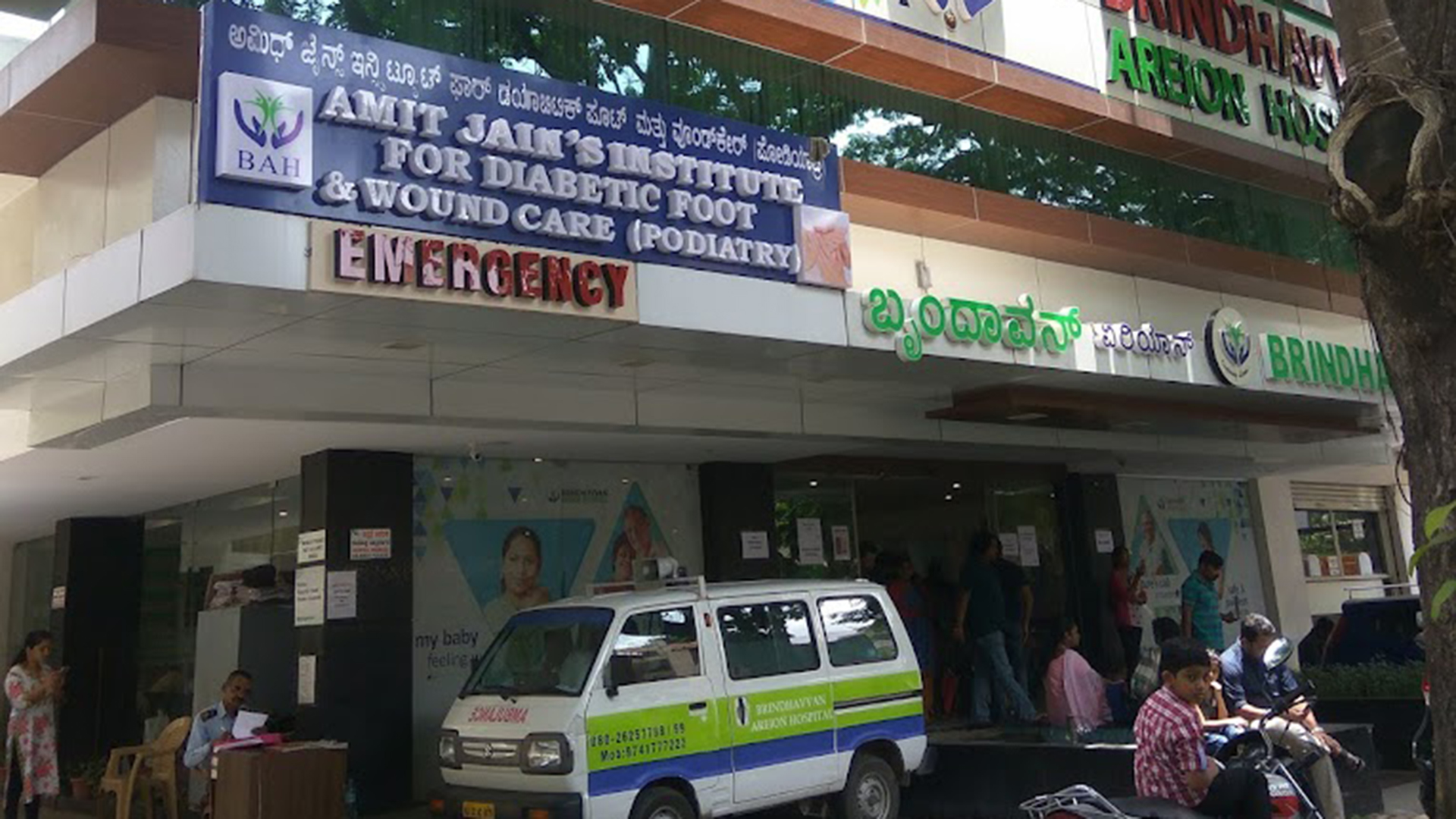
People searching for hip replacement surgery near me in Chamrajpet are not only looking for a surgeon. They want a complete, well-supported journey: a clear diagnosis, honest advice about whether surgery is needed, safe anaesthesia, good nursing care, round-the-clock backup and proper rehabilitation. Brindhavvan Areion Hospital, at 17, 4th Main Road, Chamrajpet, Bengaluru 560018, brings these together under one roof.
1. Expert orthopaedic evaluation. Your journey begins with a consultation in our Orthopedics department, where the doctor examines your hip, reviews your X-rays and scans, and explains your options clearly, including non-surgical ones. You can read more about our Orthopaedic Surgery services.
2. Complete pre-operative checks. Before surgery, you need to be fit for anaesthesia and the operation. Blood tests, ECG, chest assessment and other checks are done through our pathology and radiology departments. Patients with conditions such as high blood pressure or diabetes are reviewed by our General Medicine team so that these are well controlled before the operation.
3. Safe anaesthesia and surgery. Our Anaesthesiology team plans the right anaesthesia for you, often spinal anaesthesia, and monitors you throughout the operation.
4. Round-the-clock inpatient care. After surgery, nurses and doctors watch your pain, wound, blood pressure and general health. If a patient needs closer monitoring, our Critical Care units are available.
5. Physiotherapy and rehabilitation. Recovery depends greatly on early, guided movement. Our Physiotherapy team helps you stand, walk and regain strength safely.
6. Insurance and admission support. We help families with admission formalities and medical insurance processes, so that you can focus on recovery.
You can meet our doctors and book an appointment online, or call 080 26257700.
How to Prepare for Hip Replacement Surgery
Good preparation makes the operation safer and the recovery smoother. Your care team may advise you to:
- Complete all tests and bring your previous reports, scans and a list of all medicines you take
- Tell the doctor about all medical conditions, allergies and past operations
- Control blood pressure and blood sugar before the surgery
- Stop smoking and limit alcohol, because both slow healing
- Strengthen your muscles with the exercises your physiotherapist teaches before surgery
- Prepare your home: keep a clear walking path, remove loose rugs, arrange a raised toilet seat and a sturdy chair with arms, and keep daily items within easy reach
- Arrange help for the first few weeks, since you will need support for cooking, bathing and moving around
- Follow fasting instructions given by the anaesthesia team on the day before the surgery
What Happens During the Operation?
The operation usually takes one to two hours. Under anaesthesia, the surgeon makes an incision at the hip, removes the damaged ball and cartilage, prepares the socket and the thigh bone, and fixes the artificial parts in position. The surgeon then tests the movement and stability of the new joint and closes the wound. Different surgical approaches, such as the posterior, lateral or anterior approach, are used, and the best choice depends on your anatomy, the condition of your hip and the surgeon’s experience. Your surgeon will explain the plan before the operation.
Recovery After Hip Replacement: What to Expect
Recovery is a journey, and every patient moves at a slightly different pace. A general picture looks like this:
- Day of surgery and the next day: With the help of your physiotherapist and nurses, you are encouraged to sit up and often to stand and take a few steps with a walker. Early movement helps prevent blood clots and stiffness.
- First few days in hospital: Pain is controlled with medicines, and you practise walking, climbing a few steps and moving safely. Most patients stay in hospital for a few days, depending on their condition.
- First six weeks: You continue to use a walker or sticks and follow precautions. Gentle exercises build strength. Many people return to light daily activities during this time.
- Two to three months: Walking becomes easier and the limp fades. Many patients can resume driving and desk work, as advised by their surgeon.
- Three to six months and beyond: Strength and stamina continue to improve, and most people enjoy a largely pain-free hip.
Your surgeon will give you specific instructions, including which positions to avoid, because the new joint needs time to settle.
Tips for a Smooth Recovery
- Follow your physiotherapy plan faithfully. Regular exercises are as important as the operation itself.
- Take medicines as prescribed, including those that protect against blood clots and infection.
- Care for the wound. Keep it clean and dry, and report redness, swelling, discharge or fever promptly.
- Use walking aids as long as advised.
- Follow the movement precautions your surgeon gives, especially in the first weeks. Ask about squatting, cross-legged sitting and Indian-style toilets, because these positions may need to be avoided for some time.
- Eat well. Protein, calcium, vitamin D and plenty of fluids help healing.
- Keep your follow-up appointments for wound checks and X-rays.
Risks and Complications: An Honest Look
Hip replacement is generally safe, but like every major operation, it carries some risks. These include infection, blood clots in the legs, dislocation of the new joint, a difference in leg length, injury to nearby nerves or blood vessels, stiffness, loosening or wear of the implant over many years, and the usual risks of anaesthesia. The chance of these problems depends on your age, health, bone quality and how closely you follow advice. Your surgeon will discuss the risks in your specific case before you consent, and the care team takes many steps to reduce them.
Seek medical help urgently if, after surgery, you have increasing pain, fever, wound discharge, swelling or pain in the calf, chest pain or breathlessness, or if the leg suddenly looks shortened or turned.
How Long Does a Hip Replacement Last?
With modern implants, many hip replacements function well for fifteen to twenty years or longer, and some last even longer. The lifespan depends on your age, weight, activity level and how well the joint is cared for. Younger and very active patients may need a revision operation in their lifetime, while many older patients never do. Keeping a healthy weight, staying active in a gentle way and attending regular check-ups help your new hip last.
Hip Fracture in Older Adults: Why Speed Matters
A fall that breaks the hip is an emergency. In older adults, early surgery, often within a day or two, followed by early movement, gives the best chance of recovery and helps prevent complications of long bed rest. If an older family member falls and cannot stand, has severe hip pain or a leg that looks shorter or turned outward, do not wait. Bring the person to a hospital with 24/7 emergency care. Our emergency services and ambulance line, 080 26257700, are available at any hour.
Protecting Your Hips and Bones for the Future
Whether or not you need surgery, a few habits help protect your joints and bones:
- Maintain a healthy weight
- Stay active with low-impact exercise such as walking, swimming and cycling
- Get enough calcium and vitamin D, and get your bone health checked as you age
- Prevent falls at home with good lighting, non-slip mats and handrails in the bathroom
- Avoid smoking and limit alcohol
- Get early advice for hip or groin pain instead of ignoring it
A routine health check-up can also help you stay on top of your overall health before any surgery becomes necessary.
Why Choose Brindhavvan Areion Hospital for Hip Replacement Surgery?
- Multispecialty support under one roof: orthopaedics, anaesthesiology, general medicine, critical care and physiotherapy work together.
- 24/7 availability: emergency care, pharmacy, diagnostics and ambulance services run day and night.
- In-house diagnostics: laboratory, X-ray, CT scan, ECG and ultrasound facilities speed up planning.
- Clear, honest guidance: you are told whether you need surgery, and what your options are.
- Support for families: help with admission and insurance procedures.
- Convenient location: easy to reach for residents of Chamrajpet, Basavanagudi, Chickpet, Gandhi Nagar, Vijayanagar, Jayanagar and other areas of Bangalore. See our contact page for directions.
You can also learn more on our About Us page or explore all our surgical care services.
Frequently Asked Questions (FAQs)
1. Where can I find hip replacement surgery near me in Chamrajpet?
Brindhavvan Areion Hospital on 4th Main Road, Chamrajpet, offers orthopaedic consultation, diagnostics, surgery, inpatient care and physiotherapy support, with 24/7 emergency services. You can book online or call 080 26257700.
2. Who needs a hip replacement?
People whose hip joint is badly damaged by arthritis, avascular necrosis, fracture or other conditions, and who still have severe pain and difficulty with daily activities despite non-surgical treatment, may need a hip replacement. Your orthopaedic doctor decides this after examination and imaging.
3. Is hip replacement surgery painful?
The operation is done under anaesthesia, so you do not feel pain during it. Some pain is expected afterwards, but it is managed with medicines and gets better steadily. Most patients find that the long-standing hip pain improves greatly once they recover.
4. How long will I stay in the hospital?
Most patients stay for a few days after surgery, depending on their health, the type of operation and how well they are moving. Your doctor will tell you what to expect for your case.
5. How long does recovery take?
Many people walk with support within a day or two, return to light activities in a few weeks and feel much stronger by three months. Full recovery can take several months. Following your physiotherapy plan makes a big difference.
6. How long does an artificial hip last?
Modern hip implants often last fifteen to twenty years or more. Longevity depends on age, weight, activity and care of the joint.
7. Can I sit cross-legged or use an Indian toilet after hip replacement?
These positions can strain the new joint, especially in the early weeks. Ask your surgeon which positions to avoid and for how long, and consider a raised toilet seat or commode at home.
8. What are the risks of hip replacement?
Possible risks include infection, blood clots, dislocation, difference in leg length, nerve injury and implant wear over time. Your surgeon will explain these in detail, and the team takes precautions to lower them.
9. Is hip replacement surgery in Bangalore covered by health insurance?
Many health insurance policies cover hip replacement when it is medically necessary, but coverage depends on the plan. Our team can help you with insurance paperwork. Check the details on our patient care page or ask at the reception desk.
10. Can I avoid hip replacement surgery?
In the early stages of hip arthritis, physiotherapy, weight loss, medicines and lifestyle changes can help delay or even avoid surgery. When the joint is badly damaged, replacement is usually the most effective treatment. A consultation will tell you where you stand.
Final Thoughts
Hip pain does not have to be a life sentence. For many people, a well-planned hip replacement, supported by good anaesthesia, careful nursing and dedicated physiotherapy, brings back comfort and independence. The key is to get an honest assessment early, understand your options and choose a hospital that stays with you from the first consultation to the last follow-up.
If you are searching for hip replacement surgery near me in Chamrajpet, Brindhavvan Areion Hospital is ready to guide you with expert orthopaedic care, complete diagnostics and 24/7 support.
Book your consultation: click here to book online or call 080 26257700.
Disclaimer: This article is for general awareness only and is not a substitute for professional medical advice. Please consult a qualified doctor for diagnosis and treatment.